



When your furnace won’t turn on, the cause is often something outside the furnace itself: a thermostat setting, a switch someone bumped, a tripped breaker, or a safety that’s cutting power on purpose. Those are worth ruling out before anyone takes the furnace apart, and most of them take a minute or two.
This guide walks through the checks in the order we’d do them, starting at the thermostat and working toward the furnace. If you get to the end and it still won’t start, that’s the point to schedule furnace repair. And if the house is losing heat fast in freezing weather, skip ahead and call us for emergency heating service.
First, What Does “Won’t Turn On” Look Like?
People use the phrase for a few different problems, and it helps to know which one you have. This article is about a furnace that does nothing at all when the thermostat calls for heat. No hum, no fan, no clicking. If the blower runs but the air never warms up, that’s a different problem, and our article on a furnace blowing cold air covers it. If the furnace starts, runs briefly, and keeps shutting off, see furnace short cycling instead.
Work Through These Checks in Order
None of these steps involve opening the burner compartment or touching gas parts. Go one at a time, and give the furnace a minute or two after each change before deciding it didn’t work. Many furnaces wait a short time after a call for heat before anything starts.
1. Start at the thermostat
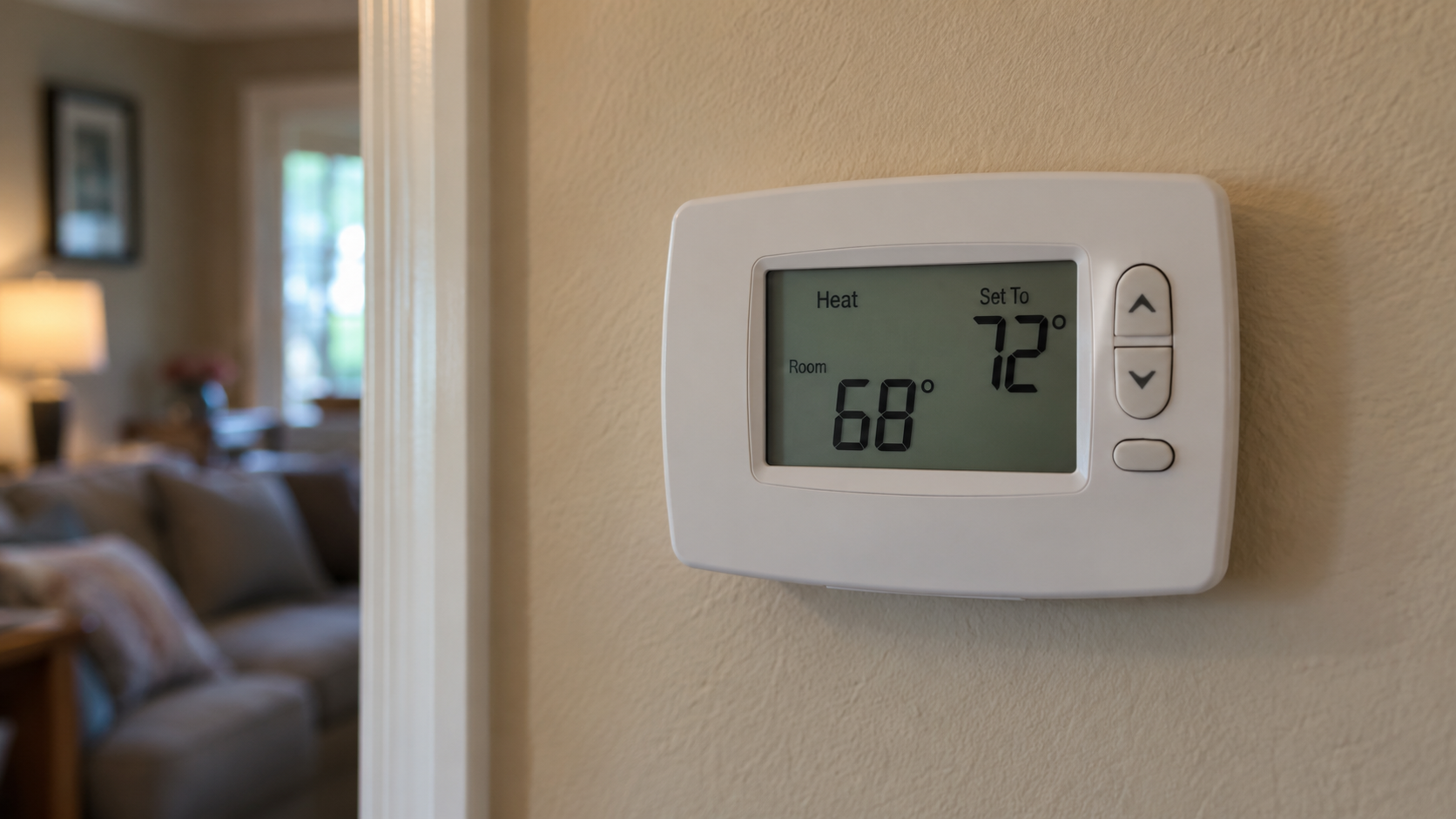
Make sure it’s set to Heat, not Cool or Off, and that the temperature you’ve set is a few degrees above what the room actually is. Check for a schedule or hold setting that’s overriding what you typed in. Smart thermostats can also be changed from an app, so it’s worth asking whether anyone else in the house adjusted it.
Pay attention to the screen. If it’s blank and the thermostat runs on batteries, replace them. If it’s a hard-wired thermostat with no batteries and the screen is blank, that’s a clue: those thermostats usually get their power from the furnace. A dead screen often means the furnace has lost power too, which points you to the next few steps.
2. Find the furnace power switch
Most furnaces have a service switch that looks exactly like a light switch. It’s usually on the furnace, on a nearby wall or ceiling joist, or at the top of the basement stairs. Because it looks like a light switch, it gets flipped off by accident more often than you’d think. Make sure it’s on.
3. Check the breaker
Look in your electrical panel for a breaker labelled furnace, heat, or HVAC. A tripped breaker usually sits in the middle position or looks slightly out of line with the others. Push it fully off, then back on.
Reset it once. If it trips again, leave it off and call for service. A breaker that keeps tripping is telling you there’s an electrical problem in the furnace, and resetting it repeatedly can make things worse.
4. Make sure the front panel is on tight
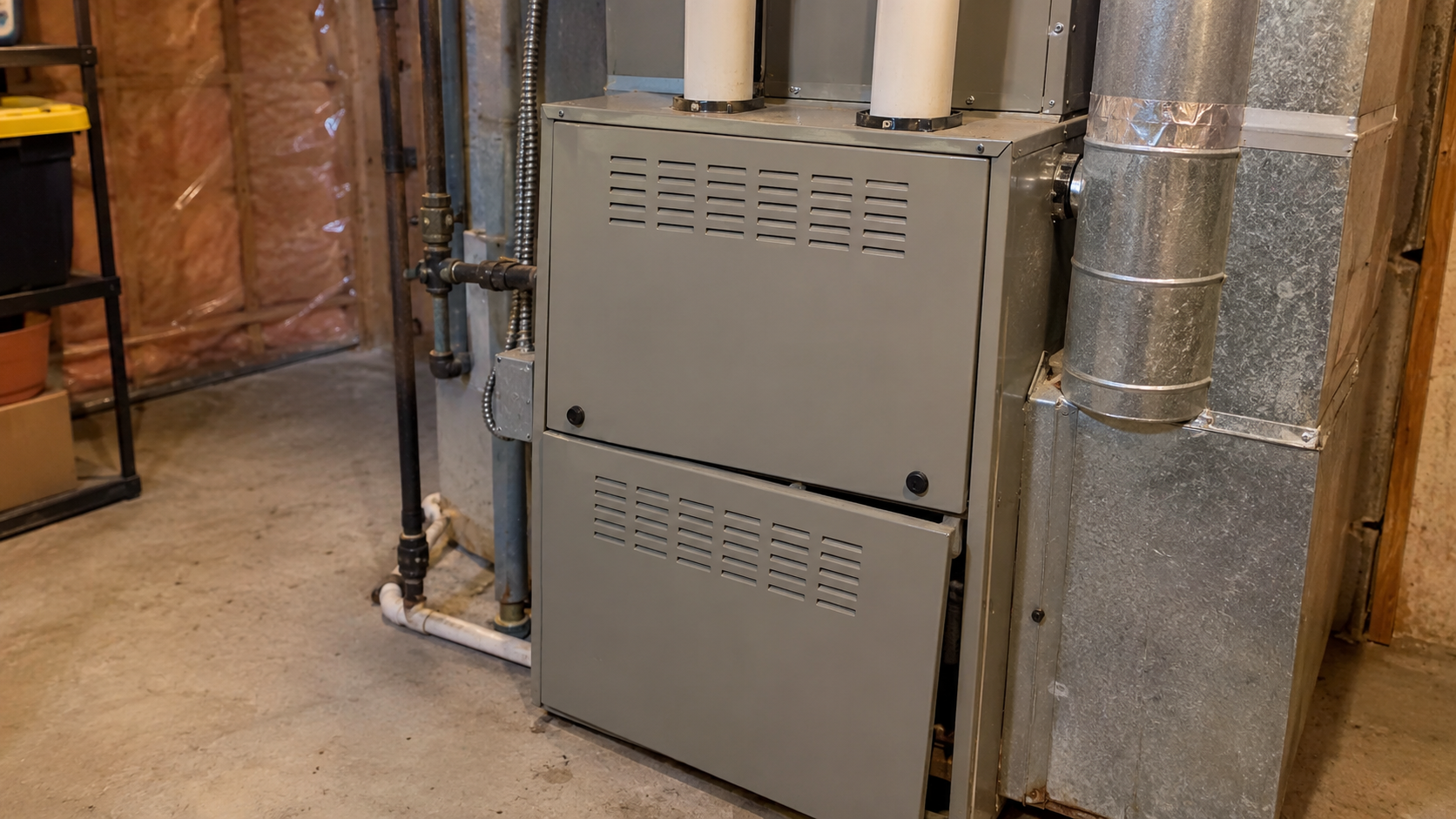
This one catches a lot of people right after they change a filter. Furnaces have a safety switch behind the front panel that cuts power whenever the panel is off or not pressed in all the way. It’s there so nobody reaches into a running blower. If the panel is slightly crooked or one tab isn’t hooked in, the furnace won’t run at all.
Take the panel off and set it back on squarely, making sure it sits flat and presses in that small button or switch near the edge.
5. Look for water around the furnace
High-efficiency furnaces and central air systems both produce water that has to drain away. Many homes have a small condensate pump near the furnace that pumps that water to a drain, and many of those pumps, along with some drain pans, have a float switch. When the water backs up, the float switch shuts the system off so it doesn’t overflow onto the floor.
If you see water around the furnace, in the condensate pump’s reservoir, or in a pan under the equipment, that may be why it won’t start. Clearing a backed-up pump or drain line is usually a service call, but it at least tells you where the problem is.
6. Read the status light
Most modern furnaces have a small light on the control board that you can see through a little window in the lower panel. What it’s doing tells you a lot:
- No light at all. The control board probably isn’t getting power. Go back over the switch, the breaker, and the front panel. If those are all fine, a fuse or transformer inside the furnace may have failed, and that’s a job for a technician.
- A slow, steady blink or a steady light. On many furnaces, this means power is on, and the board is waiting. If the furnace still isn’t starting, the thermostat probably isn’t calling for heat, so look at its settings and wiring again.
- A pattern of flashes. That’s a fault code. Count the flashes and match them to the chart on the inside of the furnace door. Write it down for the technician.
Light patterns differ between brands and models, so always go by the chart on your own furnace. If you have a Lennox furnace that shows code 223, our guide to Lennox error code 223 explains what it means.
7. Confirm the gas is on
Find the gas shutoff on the pipe leading into the furnace. When the handle runs in the same direction as the pipe, the gas is on. If it’s crossways, it’s off. If you didn’t turn it off yourself, find out why before turning it back on, especially if any work was done recently.
You can also check whether your other gas appliances are working, like the stove or the water heater. If none of them are, the problem may be with the gas supply to the house, and Nicor Gas is the right call.
8. Try one reset
If the furnace went into a lockout after several failed starts, turning the power switch off for about 30 seconds and back on can let it try again. Do this once. If it doesn’t start, or starts and then quits again later, something is causing the lockout and it needs to be diagnosed.
If You Smell Gas, Stop Here
Don’t troubleshoot. Get everyone out of the house without flipping light switches, using phones, or starting a car in an attached garage. Once you’re outside, call Nicor Gas at 1-888-642-6748 or 911. If your carbon monoxide alarm goes off, get everyone outside and call 911. Wait until the home has been cleared before calling us to look at the furnace.
What It Usually Means When the Easy Checks Don’t Work
If you’ve been through every step and the furnace still sits there silent, the problem is most likely inside it. Common culprits include a blown low-voltage fuse, a failed transformer, a bad control board, a broken thermostat wire, or a failed igniter or inducer motor on a furnace that has power but can’t get through its startup.
Several of these look exactly alike from the outside. When we come out, our technicians test the furnace’s startup sequence with meters to find where it stops, instead of swapping parts until something works. You’ll get a flat-rate price before any repair starts. The diagnostic is $75, or $99 on evenings, weekends, and holidays.
Keeping the House Safe While You Wait
In a Chicago-area cold snap, a house can lose heat quickly. If you’re waiting for a technician, a few steps help:
- Open the cabinet doors under sinks on outside walls so warmer room air reaches the pipes.
- Let faucets on outside walls drip slowly.
- Close doors to rooms you aren’t using, and keep curtains closed at night.
- Use electric space heaters only as directed, with plenty of clearance from furniture, bedding, and curtains.
Never heat the house with a gas oven or stove, or run a generator, grill, or other fuel-burning equipment indoors or in an attached garage. These can cause carbon monoxide poisoning.
Common Questions We Receive
Why did my furnace stop working right after I changed the filter?
Usually the front panel isn’t seated properly, so the door safety switch is cutting power. Reseat the panel firmly. Also make sure the new filter is the right size and is in all the way, since a filter that’s sticking out can keep the panel from closing.
My thermostat is blank. Is the thermostat broken?
Not necessarily. On battery-powered models, start with new batteries. On hard-wired models, a blank screen often means the furnace isn’t sending it power, so check the furnace switch, the breaker, and the front panel before replacing the thermostat.
Is a furnace that won’t turn on an emergency?
It depends on the weather and who’s in the house. No heat during freezing temperatures, especially with young children, older adults, or anyone with a medical condition, is worth an emergency call. Our phones are answered 24/7, including holidays.
Need Help Getting Your Heat Back?
Pure Comfort Heating and Cooling is a family-owned company that has served Streamwood and the northwest suburbs since 2008. If your furnace still won’t start after these checks, call (708) 515-4822 any time, day or night, and we’ll help you figure out what’s going on.