



A furnace blowing cold air is usually telling you one of two things: either the blower is running when the furnace isn’t trying to heat, or the furnace tried to heat, and one of its safety controls stopped the burners. The first is often a thermostat setting you can fix in seconds. The second points to a specific part or condition that needs attention.
The quickest way to tell them apart is to notice when the cold air shows up. A short blast of cool air at the start or end of a cycle is normal. Air that never warms up, or warm air that turns cold partway through a cycle and keeps repeating, is not.
Below, we explain what those patterns usually mean, which checks are safe for a homeowner, and when it is better to shut the furnace off and call for service.
Start With When the Cold Air Happens
The timing narrows down the cause faster than anything else. Use this table to match what you are seeing to the most likely explanation.
| What you notice | What it usually means | What to do |
|---|---|---|
| Cool air for the first minute or so of a cycle | Normal. The burners need a short warm-up before the blower starts, and air sitting in the ducts is cool. | Nothing, as long as warm air follows. |
| Cool air for a short time after the heat shuts off | Normal. Many furnaces run the blower briefly after the burners stop to pull remaining heat out of the furnace. | Nothing, unless the blower never shuts off. |
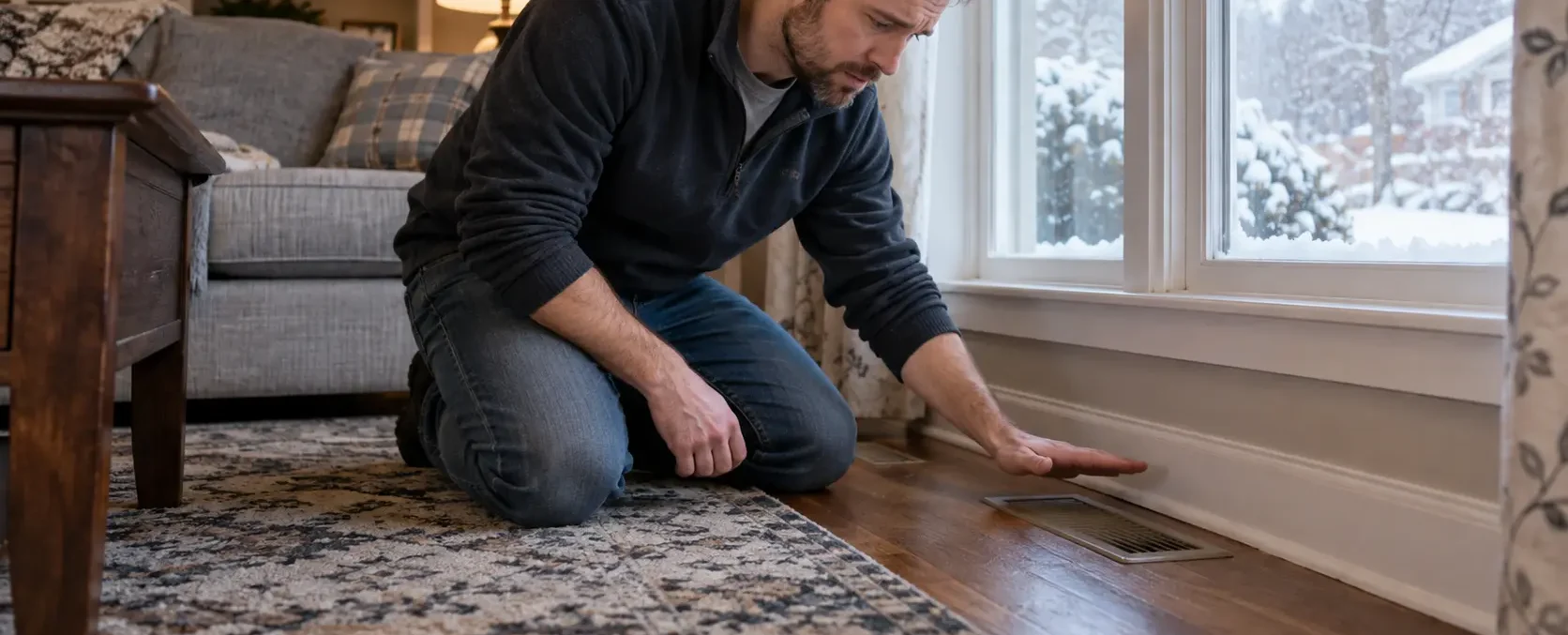
| Air blowing between heating cycles, all day | The thermostat fan is set to On instead of Auto. | Switch the fan setting to Auto. |
| Warm air that turns cold mid-cycle, over and over | A safety control is shutting the burners off, often from overheating or a flame-sensing problem. | Check the filter. If it keeps happening, call for service. |
| Air that never warms up at all | The burners are not lighting, or the furnace is in a safety lockout. | Run the safe checks below, then call if heat doesn’t return. |
| Warm air in some rooms, cool or weak air in others | A ductwork or airflow problem rather than a furnace problem. | Check vents and returns, then have the ducts inspected. |
Why the Blower Can Run With No Heat Behind It
A gas furnace heats in a set order. When the thermostat calls for heat, a small inducer fan starts to clear the combustion chamber. A pressure switch confirms that air is moving through the venting. The igniter heats up, the gas valve opens, and a flame sensor confirms the burners actually lit. Only then does the main blower start pushing warm air into the house.
If any step in that chain fails, the control board stops the gas. But the blower and the heating side are separate. The board may keep the blower running to cool the furnace down, or cycle it while the furnace retries, and that is the cold air you feel at the registers.
This is also why we diagnose furnaces by tracing that sequence rather than guessing at parts. Finding the exact step where the cycle stops tells you which part or condition is responsible.
Common Causes of a Furnace Blowing Cold Air
The thermostat fan is set to On
With the fan set to On, the blower runs continuously, including the long stretches between heating cycles when the burners are off. That room-temperature air feels cold coming out of a floor register. Setting the fan to Auto lets the blower run only when the furnace is heating.
While you are at the thermostat, confirm it is set to Heat, that the setpoint is above the current room temperature, and that the display is not blank or dim from weak batteries.
A clogged air filter is making the furnace overheat
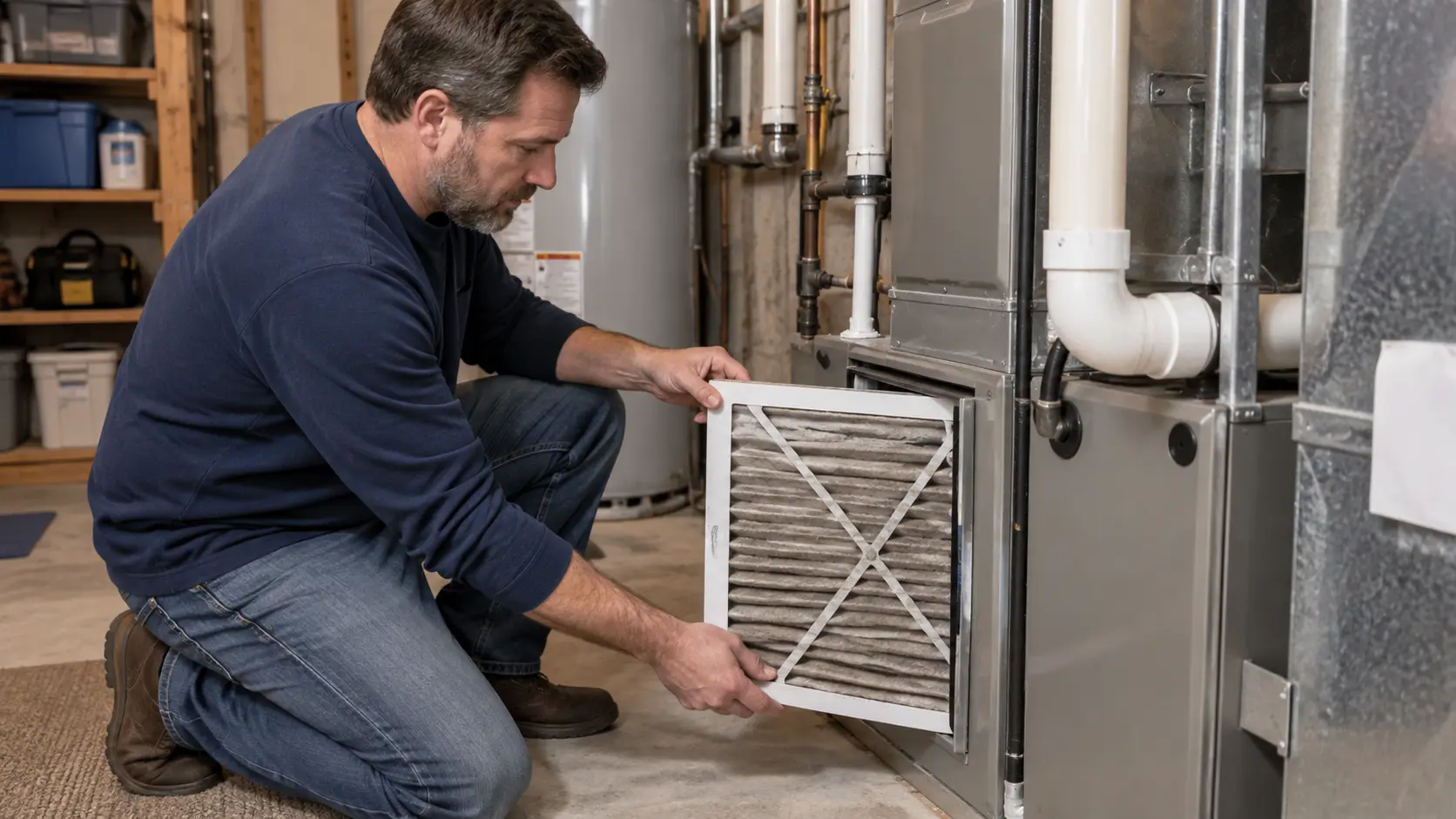
A dirty filter restricts the air moving across the heat exchanger. Heat builds up inside the furnace until a high-limit switch shuts the burners off to protect the equipment. The blower keeps running to cool things down, so the air turns cold. Once the furnace cools, it relights, and the cycle repeats.
This pattern of warm, then cold, then warm again is one of the most common versions of this problem. A fresh filter often fixes it. If it continues with a clean filter, the restriction may be in the blower, the coil above the furnace, or the return ductwork.
A dirty or failing flame sensor
The flame sensor is a thin metal rod that sits in the burner flame and tells the control board the burners are lit. When it is coated with residue, the board can’t read the flame and shuts the gas off within a few seconds as a precaution.
The typical sign is a furnace that lights, runs for a few seconds, shuts off, and tries again. After several failed attempts, many furnaces go into a lockout and stop trying for a period of time. Cleaning or replacing a flame sensor is a common, lower-cost repair, but it means working inside the burner compartment, so it is a job for a technician.
An ignition or gas supply problem
If the burners never light, the furnace can’t make heat. Common causes include a cracked or worn hot surface igniter, a gas valve that isn’t opening, or a closed gas shutoff at the furnace. Older furnaces with a standing pilot light will also stop heating if the pilot goes out.
Please don’t try to relight or adjust gas components yourself. If the furnace isn’t lighting, or you smell gas at any point, follow the safety steps further down this page.
A blocked vent pipe or condensate drain on a high-efficiency furnace
High-efficiency furnaces usually vent through two white PVC pipes on the side of the house, one bringing in combustion air and one carrying exhaust out. If either pipe is blocked by drifting snow, frost buildup, leaves or a nest, the pressure switch won’t confirm proper airflow, and the furnace won’t light.
These furnaces also produce water as part of normal operation, which drains through a small trap and hose. A clogged trap or drain can back water up and trip the same safety. In the Chicago area, a blocked vent pipe is worth checking after any heavy or blowing snow, especially if the pipes sit low on the wall.
Leaky or disconnected ductwork
Sometimes the furnace is making plenty of heat, but it isn’t reaching certain rooms. A disconnected duct in a crawlspace or unfinished area, or a leaky run through an unheated space, lets warm air escape and cooler air mix in. The result is weak or lukewarm air at some registers while others feel fine.
In older homes, restricted return air, undersized filters, and aging ductwork can also limit how much warm air the system delivers, even when the furnace itself works properly. If only part of the house feels cold, the ductwork deserves a look along with the furnace.
A control board or blower control problem
The control board runs the entire heating sequence. When it fails, it may run the blower without ever starting the burners, or stop partway through the cycle. Because a board fault can look like several other problems, it should be confirmed with testing before the part is replaced.
What You Can Safely Check Before Calling
These checks are safe for most homeowners and do not require opening the burner or electrical compartments.
- Thermostat settings. Set it to Heat, set the fan to Auto, and raise the temperature a few degrees above the room. Replace the batteries if it uses them.
- The air filter. If it is gray, dusty or you can’t remember when it was changed, replace it with the correct size.
- Power to the furnace. Make sure the service switch near the furnace (it often looks like a light switch) is on, and that the furnace breaker hasn’t tripped. If the breaker has tripped, reset it once. If it trips again, leave it off and call for service.
- Vents and returns. Open the supply registers and make sure rugs and furniture aren’t blocking any return grilles.
- Outdoor vent pipes. If you have PVC pipes on an exterior wall, check that both openings are clear of snow, ice, leaves and debris.
- The status light. Many furnaces have a small blinking light visible through a window in the lower panel. Count the blinks and match them to the code chart on the inside of the furnace door. Write the code down, since it helps the technician narrow down the problem.
If the furnace was in a lockout, turning the power off and back on once may let it try again. If it heats normally afterward but fails again later, the underlying cause is still there. Repeated resets won’t fix it and can put extra wear on the furnace.
When to Stop and Call a Technician
Turn the furnace off and call us if any of these apply:
- The furnace still blows cold air after the checks above
- It lights, shuts off within seconds, and keeps retrying
- The breaker trips again after one reset
- You notice water around the furnace, a burning or electrical smell, or a loud bang at startup
- The house is losing heat in freezing weather
Some situations are safety issues rather than repair calls. If you smell gas, leave the home right away without using light switches or phones inside, and call Nicor Gas at 1-888-642-6748 or 911 from outside. If a carbon monoxide alarm sounds, get everyone outside and call 911. Once the home has been cleared, the furnace and venting should be inspected before you use them again.
For no-heat situations, our phones are answered 24/7, including evenings, weekends, and holidays. Learn more about our emergency HVAC service.
Frequently Asked Questions
Why is the air warm but not hot?
Air from a working furnace usually feels warm rather than hot, especially from vents far from the furnace. Newer two-stage and variable-speed furnaces often run on a lower setting with more airflow, so the air can feel milder than an older furnace’s, even while the house heats normally. If your system pairs a heat pump with a gas furnace, the heat pump’s supply air also feels cooler. If rooms aren’t reaching the thermostat setting, that is worth having checked.
Should I keep resetting my furnace?
No. One reset is reasonable after a power interruption or a cleared vent pipe. If the furnace needs resetting again, a safety control is doing its job, and the cause needs to be found.
Does a furnace blowing cold air need to be replaced?
Usually not. Most causes of a furnace blowing cold air, such as a dirty flame sensor, a failed igniter, a pressure switch or a blocked drain, are repairable parts. Replacement becomes a conversation when a major failure happens on an older furnace that has needed several repairs, and we lay out both options when both make sense.
Get Your Heat Back With Pure Comfort
If your furnace is still blowing cold air, our technicians trace the heating sequence to find exactly where it stops, then explain what failed and give you a flat-rate price before any work begins. The diagnostic is $75, or $99 on evenings, weekends, and holidays, and our trucks carry common furnace parts, so many repairs are finished on the first visit. Learn more about our furnace repair service.
Pure Comfort Heating and Cooling is a family-owned company that has provided HVAC service in Streamwood and the surrounding northwest suburbs since 2008. Call (708) 515-4822 any time, day or night.
Many of the problems covered here, including dirty flame sensors, clogged filters, and blocked drains, are things an annual furnace maintenance visit is designed to catch. For quick checks you can do yourself each fall, see our guide to the first furnace startup.