Pure Comfort designs and installs HVAC zoning with Honeywell and Lennox controls, so upstairs, downstairs and finished basements can each hold their own temperature, with ductwork and airflow planned to protect your equipment.
Zoning works best with a properly designed system. See what it means to work with a Lennox Premier Dealer.
Pure Comfort designs and installs HVAC zoning with Honeywell and Lennox controls, so upstairs, downstairs and finished basements can each hold their own temperature. Ductwork and airflow are planned to protect the equipment. We serve Streamwood and the Northwest Suburbs.
Reviewed by Gene Baldassano, owner and NATE- and EPA 608-certified HVAC technician since 2008 · Updated
The Basics
How HVAC Zoning Works
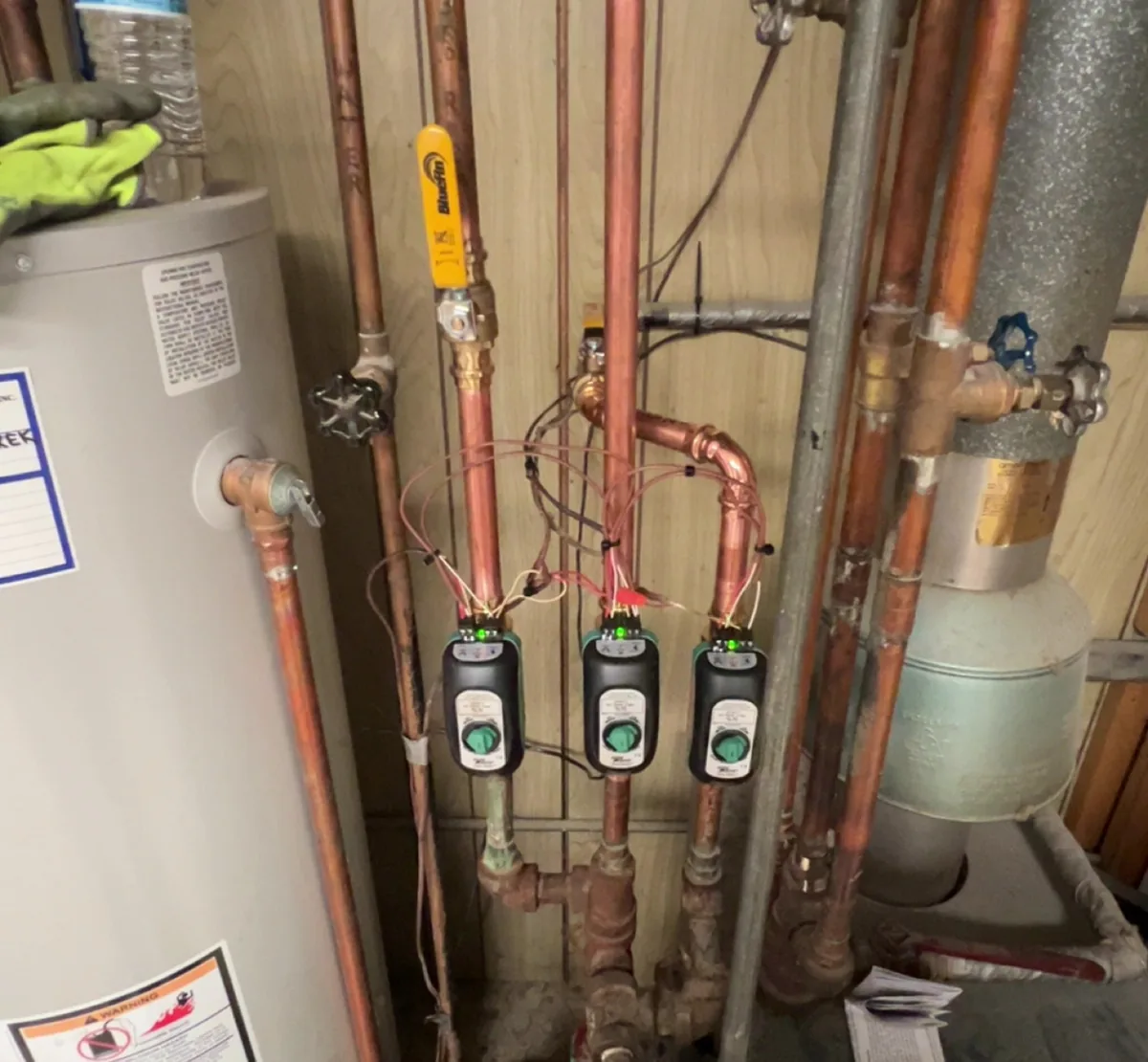
A zoning system uses multiple thermostats or sensors, a control panel and motorized dampers to direct conditioned air according to each area’s demand. One central HVAC system may serve several zones when the equipment and ductwork can support the design.
Zoning is different from simply closing registers. The system must continue moving enough air as individual zones open and close.
The Components
Common Zoning Components and Configurations
Zone Thermostats or Sensors
Each zone uses a thermostat or sensor to communicate its temperature needs to the control system.
Motorized Dampers
Dampers open and close within selected duct branches to manage airflow to different areas of the home.
Compatible Equipment and Controls
Equipment staging or modulation can help the HVAC system respond to changing zone demand. Available functions depend on the furnace, air conditioner, heat pump and control setup.
Zoning Systems: Good, Better, Best
Zoning splits your home into areas with their own thermostats, so upstairs, downstairs and the basement each stay comfortable. We install Honeywell zoning on most systems, and Lennox Smart Zoning with iHarmony on Lennox communicating systems for the best possible result.
Good
Honeywell Zoning
A Honeywell zone panel and motorized dampers in the ductwork, with a thermostat in each zone.
ZoneAn area of the home with its own thermostat, like the upstairs bedrooms.
Zone damperA motorized plate in the duct that opens or closes to send air where it is needed.
Communicating systemThermostat, furnace or air handler and outdoor unit share data to run at the ideal speed.
Supply/return sensorsMeasure air temperature in the ducts so the system can protect itself and fine-tune comfort.
Zoning works best with two-stage or variable-capacity equipment. We check your ductwork first, since every zone needs proper duct sizing and airflow.
Is It For You?
When HVAC Zoning May Help
Zoning may be worth evaluating in multi-level homes, finished basements, additions or areas used on different schedules. It can provide separate temperature control where one thermostat does not represent the whole house well.
Uneven comfort does not automatically mean zoning is needed. Duct restrictions, missing returns, insulation or equipment sizing may be the real cause.
Six Things That Matter
Features to Compare
01
Number and layout of planned zones
02
Thermostat or sensor options
03
Equipment staging and control compatibility
04
Damper placement and accessibility
05
Supply and return-air capacity
06
Static-pressure strategy and future adjustment needs
Getting It Right
Dampers Cannot Hide a Duct Problem
Choosing Between Zoning and Airflow Corrections
A damaged, restricted or poorly balanced duct system should not be hidden behind motorized dampers. Duct repair, added return capacity or balancing may solve the comfort problem more directly.
Zoning becomes a stronger option when the duct system can support it and the home genuinely benefits from separate control. Pure Comfort compares those paths before recommending a design.
Installation and HVAC Compatibility
Zoning design begins with the home’s layout, duct branches, return-air paths, equipment capacity and blower operation. The plan must keep airflow within acceptable limits as zone demand changes.
Pure Comfort coordinates thermostats, the control panel and dampers with the connected HVAC equipment. Commissioning confirms that each zone responds correctly without creating avoidable pressure, noise or temperature problems.
Why Homeowners Choose Us
Why Choose Pure Comfort for Zoning Guidance
1
Evaluates airflow and duct capacity before recommending controls
2
Considers equipment staging, blower operation and zone demand together
3
Compares zoning with simpler duct or airflow corrections
4
In-house design and installation, with options-first recommendations
Reviewed and last updated by Gene Baldassano, owner of Pure Comfort Heating and Cooling and a NATE- and EPA 608-certified HVAC technician since 2008.
Manage Consent
We use cookies to analyze traffic and improve your experience.
Functional
Always active
The technical storage or access is strictly necessary for the legitimate purpose of enabling the use of a specific service explicitly requested by the subscriber or user, or for the sole purpose of carrying out the transmission of a communication over an electronic communications network.
Preferences
The technical storage or access is necessary for the legitimate purpose of storing preferences that are not requested by the subscriber or user.
Statistics
The technical storage or access that is used exclusively for statistical purposes.The technical storage or access that is used exclusively for anonymous statistical purposes. Without a subpoena, voluntary compliance on the part of your Internet Service Provider, or additional records from a third party, information stored or retrieved for this purpose alone cannot usually be used to identify you.
Marketing
The technical storage or access is required to create user profiles to send advertising, or to track the user on a website or across several websites for similar marketing purposes.