




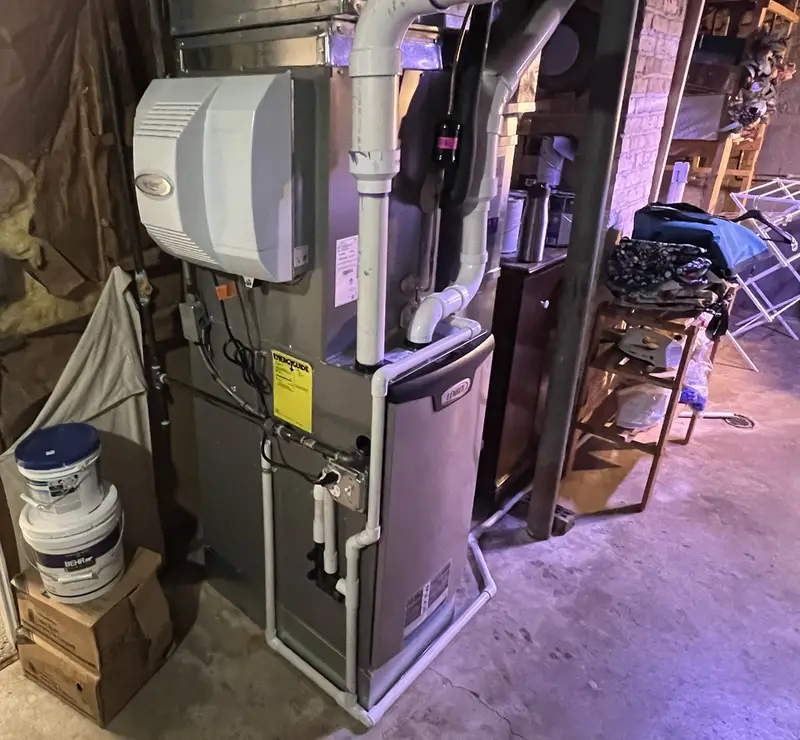
A whole-house humidifier makes sense when winter air in your home stays dry enough to cause static shocks, dry skin and sinuses, gaps in wood floors or trim, or sticky doors and pianos that drift out of tune. It mounts on your furnace and adds moisture to the air as it heats, so every room gets it without refilling tanks. As of October 2026, Pure Comfort installs bypass humidifiers for $995 and fan-powered models for $1,095.
Why homes get so dry in winter
Cold outdoor air holds very little moisture. When that air leaks into your home and is heated to 70°F, its relative humidity drops sharply, often into the teens on the coldest days. The furnace does not remove moisture; it just warms air that was already dry.
Signs your home is too dry
- Frequent static shocks from door handles and light switches
- Dry skin, cracked lips, itchy eyes or a scratchy throat in the morning
- Gaps opening between hardwood boards or along trim
- Doors, cabinets or instruments that shift or go out of tune
- A hygrometer reading below about 30% for weeks at a time
What humidity should you aim for?
Most homes are comfortable at 30% to 40% relative humidity in winter. On very cold days, lower it so moisture does not condense on windows: around 25% near 0°F and 20% or a little less on subzero days. Many humidifiers we install use an outdoor sensor to make that adjustment automatically.
If you see frost or water on the inside of your windows, the humidity is too high for the outdoor temperature. Turn it down.
Bypass vs. fan-powered humidifiers
- Bypass ($995 installed): uses the furnace blower to push air through a water panel and back into the return. It suits most homes with a basement furnace and room for a small bypass duct.
- Fan-powered ($1,095 installed): has its own fan, so it adds more moisture and does not need a bypass duct. It is a better fit for larger homes or tight furnace spaces.
Both connect to a water line and a drain, and both have a water panel that should be replaced once a year, usually at your fall furnace tune-up. Steam humidifiers are another option for very large or very tight homes, and we price them on site.
Is a humidifier right for your home?
Older homes with more air leakage usually benefit most. Newer, tighter homes often hold more moisture on their own and may need little or no added humidity, while some homes near O’Hare that received sound insulation windows are tighter than their age suggests. We check your furnace, ductwork and drain location during a free in-home estimate before recommending one.
Humidifiers are part of our indoor air quality work. You can also see humidifiers and dehumidifiers we install.
Frequently asked questions
Can a humidifier cause mold?
Not when it is set correctly and maintained. Problems come from running humidity too high for the outdoor temperature, which shows up first as condensation on windows. An outdoor sensor and a yearly water panel change prevent most issues.
Can you add a humidifier to my existing furnace?
Usually, yes. Most forced-air furnaces can take a bypass or fan-powered humidifier. We confirm space, water and drain access before quoting.
Do portable humidifiers work as well?
A portable unit helps one room and needs daily refilling and cleaning. A whole-house humidifier treats every room the furnace heats and needs a yearly panel change.
To get a price for your home, request a free estimate or call (708) 515-4822.