




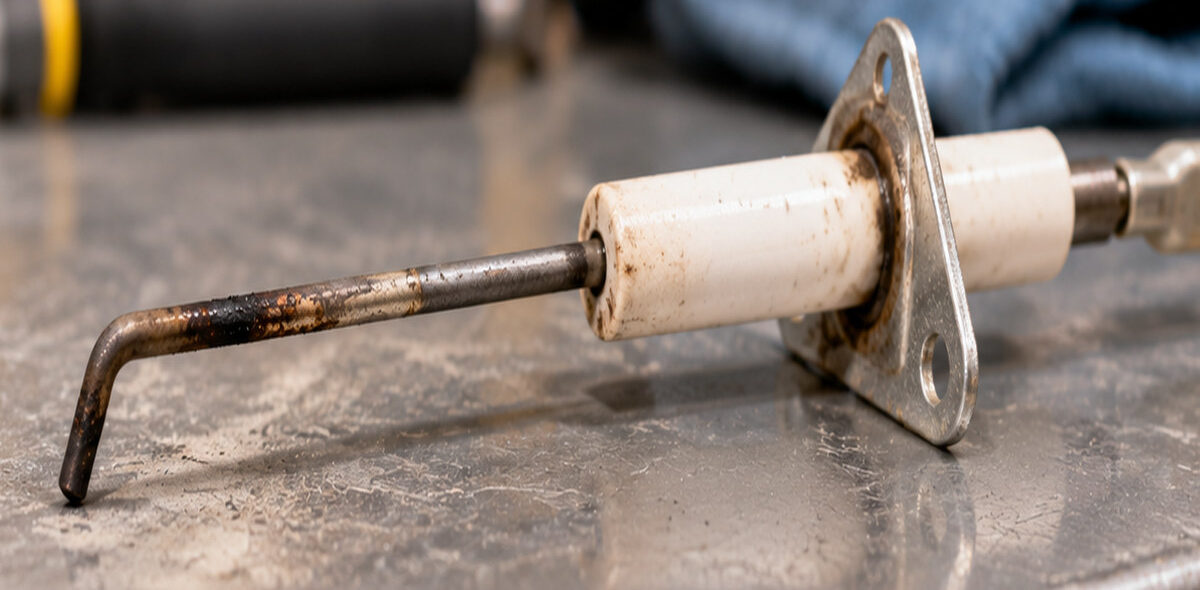
Furnace flame sensor symptoms have a pattern that’s easy to spot once you know it: the burners light, stay lit for just a few seconds, and go out, even though there’s a perfectly good flame. The furnace isn’t broken in the usual sense. It’s shutting itself down because it can’t confirm the fire it just started.
A flame sensor problem is one of the more affordable furnace repairs, but it’s also easy to confuse with an igniter, venting, or overheating problem. Below, we cover the signs that point to the sensor, the look-alikes, and why a quick cleaning doesn’t always solve it. If you’re already seeing these signs, our furnace repair technicians can test the sensor directly, and a yearly furnace tune-up is the best way to keep it from happening in the first place.
What the Flame Sensor Actually Does
Every time your furnace opens its gas valve, the control board needs proof that the gas lit. Without that proof, gas could keep flowing with nothing burning it. The flame sensor provides the proof.
It works in a way most people find surprising. A flame can carry a very small electrical current, and the sensor sits in the flame so the board can send that current through it. If the board sees the current, it knows there’s fire and keeps the gas on. If it doesn’t, it closes the gas valve within seconds. The current involved is measured in millionths of an amp, so it doesn’t take much to interrupt it.
Signs Your Flame Sensor Is the Problem
The burners light, then go out within seconds
This is the classic sign. Listen near the furnace at the start of a cycle. You’ll hear the small inducer fan start, then the igniter, then a soft whoosh as the burners light. With a failing flame sensor, the burners go quiet again after just a few seconds, well before the main blower would normally come on.
If you can see the burners through a viewing window, the flame often looks normal during those few seconds. That’s a useful clue. A clean blue flame that gets shut off anyway points toward the sensor rather than the gas supply.
It tries several times, then gives up
Most furnaces will repeat the attempt a few times. When none of them work, the control board goes into a lockout and stops trying for a while. Some furnaces then try again on their own later, which is why the heat may come and go over the course of a day without anyone touching the thermostat.
A reset fixes it, but not for long
Turning the furnace off and back on clears the lockout, so the furnace may run fine for a few cycles. Then the same pattern starts again. A sensor that’s only slightly coated can work on some cycles and fail on others, which makes the problem feel random.
The status light shows a flame-related code
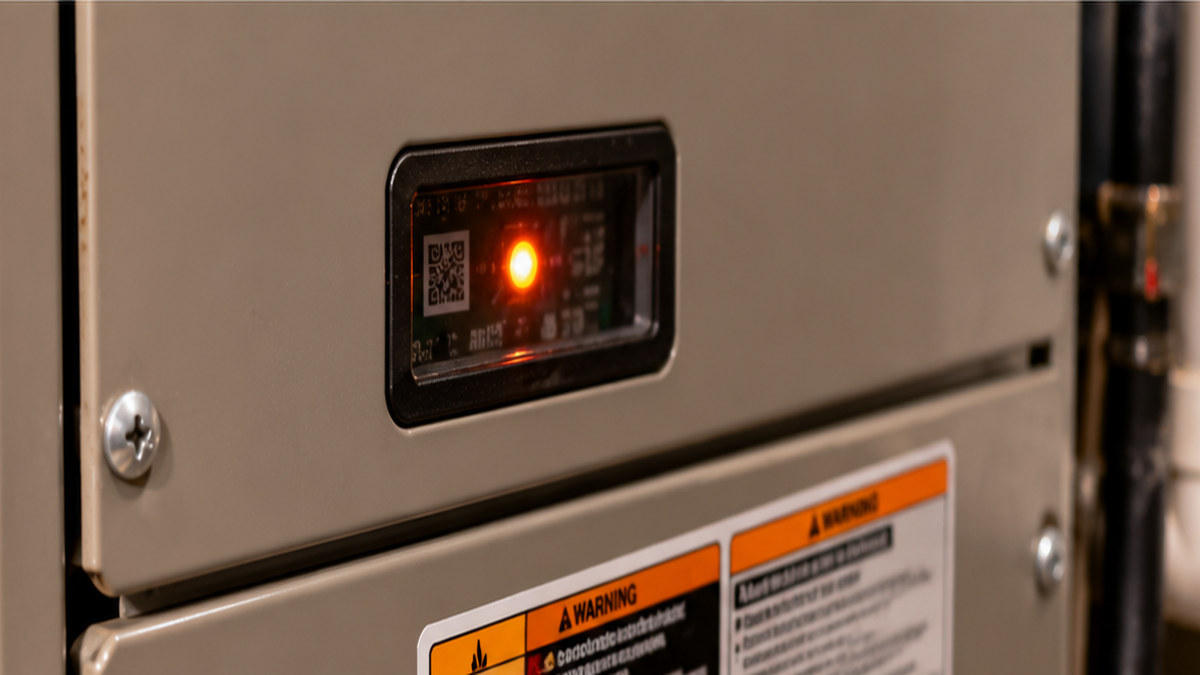
The small light on the control board, visible through the lower panel on most furnaces, often has a specific code for flame failure or ignition lockout. The chart on the inside of the furnace door tells you which one you’re seeing. If you have a Lennox furnace showing code 270, our guide to Lennox error code 270 covers that code specifically.
Problems That Look Similar but Aren’t the Sensor
Several other problems also end with a furnace that won’t stay lit. The difference is usually in what happens before the shutdown.
No flame at all
If the inducer runs and you see the igniter glow, but the burners never light, the sensor isn’t the problem. It never gets a chance to do its job. The cause is more likely the igniter, the gas valve or the gas supply.
No ignition attempt
If the inducer fan runs but the igniter never glows, the furnace is usually waiting on its pressure switch to confirm the venting is clear. That points to the vent pipes, the condensate drain or the switch itself.
The burners run for minutes, then shut off
A flame sensor problem shows up within seconds. When the burners stay lit for several minutes, and the blower keeps running after they go out, the furnace is more likely overheating. Our article on furnace short cycling explains that pattern.
Why Flame Sensors Stop Working
Most of the time, the sensor rod develops a coating from normal combustion. That layer acts like insulation and weakens the signal until the board can’t read it reliably. It builds up slowly, which is why the problem often shows up after a furnace has gone a season or two without service.
A few other things can cause the same symptoms:
- A crack in the white ceramic insulator that holds the rod
- A loose, corroded, or damaged wire between the sensor and the board
- A poor ground connection, since the signal has to complete a circuit
- A rod that has been bent out of the flame
- Burner problems that keep the flame from touching the sensor properly
Dust matters too. Furnaces draw combustion air from the room around them in many homes, so a dusty basement or a recent drywall project can speed up buildup. If a sensor keeps getting dirty quickly, that’s worth mentioning to your technician, because it can point to a combustion or air supply issue rather than just a dirty part.
Should You Clean the Flame Sensor Yourself?
You’ll find plenty of videos showing homeowners pulling the sensor and scrubbing it with sandpaper or steel wool. We don’t recommend it, for three reasons:
- It’s right next to the burners and igniter. The sensor sits in the burner compartment, and igniters are fragile enough to crack if they’re bumped.
- Abrasives can make it worse. Sandpaper and steel wool can scratch the rod and leave residue behind, and a scratched rod tends to coat over faster the next time.
- Cleaning only fixes one possible cause. If the real problem is a cracked insulator, a bad ground, or a burner issue, the furnace will be back in lockout soon.
The bigger risk is that a cleaning seems to work for a week or two, and the actual problem goes unnoticed until the coldest night of the month.
What a Flame Sensor Repair Usually Involves
A technician can measure the flame signal directly with a meter, which takes the guesswork out of it. That reading shows whether the sensor is the weak link, and checking it again after cleaning shows whether cleaning was enough or the sensor should be replaced.
From there, the technician will typically clean or replace the sensor, check the wiring and ground connection, look at the burners and the flame, and test the igniter while the compartment is open. At Pure Comfort Heating and Cooling, flame sensors are at the low end of the $100 to $700 range that most of our furnace repairs fall into, and you’ll see a flat-rate price before any work starts. The diagnostic is $75, or $99 on evenings, weekends, and holidays.
Keeping It From Coming Back
An annual tune-up is the simplest way to stay ahead of flame sensor problems. Ours includes cleaning and testing the flame sensor and igniter, along with the burners, safety controls, and venting, so a weak signal gets caught in the fall instead of during a January cold snap.
Between visits, keep the area around the furnace clean and clear, change the filter on schedule, and close off the furnace area from dust if you’re doing any remodeling nearby.
Frequently Asked Questions
How long does a flame sensor last?
There’s no fixed lifespan. Some sensors work for many years with periodic cleaning, while others need attention sooner, especially in dusty spaces. Replacement makes sense when the sensor is cracked or bent, or when it still reads weak after cleaning.
Is a dirty flame sensor dangerous?
A dirty sensor fails on the safe side. It shuts the gas off, which is why you lose heat. The real danger comes from trying to bypass it or keep the furnace running without it, which should never be done.
Is a flame sensor covered under warranty?
It may be, depending on the furnace’s age and coverage. We handle manufacturer parts warranty claims for most brands, so if a covered part fails, you pay labor only. That applies even if another company installed the furnace.
Get Your Furnace Lighting Reliably Again
Pure Comfort Heating and Cooling is a family-owned company that has served Streamwood and the northwest suburbs since 2008. If your furnace keeps lighting and shutting off, call (708) 515-4822 any time, day or night, and we’ll test the flame sensor and everything around it.