



Most furnace problems can wait until morning, but a few can’t. If you smell gas, your carbon monoxide alarm is going off, or the furnace bangs when it lights, smells like something’s burning, keeps tripping the breaker, or won’t shut off, it needs attention now. The same goes for water getting into the furnace’s wiring, or a house with no heat when it’s below freezing outside.
Most other issues can go on the regular schedule, which saves you the after-hours fee. Below, we’ll walk through which signs call for emergency furnace repair, which ones can wait, and how to shut your furnace off safely in the meantime. If you need help now, our emergency HVAC service line is answered 24/7. For anything that isn’t urgent, you can schedule standard furnace repair instead.
Furnace Emergencies That Mean You Should Leave Your Home
Some furnace problems are safety emergencies before they’re repair calls. In these situations, get everyone out of the house first and call for help from outside.
You Smell Gas
That rotten-egg smell is an additive the gas company puts in natural gas so leaks get noticed. Don’t flip light switches on or off, and don’t use your phone inside. Once everyone is out, call Nicor Gas at 1-888-642-6748 or 911.
Your Carbon Monoxide Alarm Goes Off
Get outside and call 911, even if nobody feels sick. The same applies if several people in the house suddenly get headaches, dizziness, or nausea at the same time.
You See Smoke or Flames
If smoke is coming from the furnace, or you see flames anywhere outside the burner area, shut the furnace off at its power switch only if you can reach it safely. Then leave and call 911.
Once the gas company or fire department gives the all clear, call us so we can find out what caused the problem before the furnace runs again.
Signs You Need Emergency Furnace Repair
The problems below don’t usually mean you need to leave the house. They do mean the furnace shouldn’t keep running, or that the situation is likely to get worse before morning.
No Heat in Freezing Temperatures
How urgent this is depends a lot on who’s home. A house with a newborn or an elderly parent, or anyone whose health makes cold risky, really can’t wait. The same is true on a Friday night with a cold front on the way.
Then there are the pipes. The ones in outside walls, crawlspaces, and unheated garages freeze first, and a burst pipe can easily do more damage than the furnace problem did. The American Red Cross recommends keeping the heat at 55°F or higher when you’re away in cold weather. If you have a smart thermostat and can see the house sliding toward that number, call instead of waiting for morning.
Before you pick up the phone, make sure the thermostat is set to heat, the furnace switch is on, and the breaker hasn’t tripped. Our furnace troubleshooting guide walks through those checks and covers how to protect your pipes while you wait.
Loud Banging When the Furnace Starts
A boom at startup usually means delayed ignition. Gas builds up in the burner area for a second before it catches, then lights all at once. Over time, that can crack the heat exchanger. Shut the furnace off, and don’t keep restarting it to see if it happens again.
Burning, Electrical, or Melting Plastic Smells
A dusty smell the first few times you run the heat in the fall is normal, and it fades fast. Hot plastic, scorched wiring, or something genuinely burning is different, especially if it gets stronger or comes back every time the furnace starts. Turn the furnace off and call.
A Furnace Breaker That Keeps Tripping
One reset is reasonable. If the breaker trips again, there’s probably an electrical fault in the furnace, like a failing motor or a short, and resetting it again isn’t safe. Leave it off. Sparks or buzzing from the furnace cabinet fall into the same category.
Burners That Won’t Shut Off
If you can still see or hear the burners going after the thermostat has been turned down or off, the gas valve may not be closing. Shut the furnace off at its power switch and call. Don’t confuse this with the blower, which normally keeps running for a minute or two after the burners go out.
Water Leaking Into the Furnace
High-efficiency furnaces make water as they run, and a clogged drain or dead condensate pump can put it on the floor. A small puddle on bare concrete can usually wait. Water that’s reaching the furnace’s wiring, spreading under finished flooring, or soaking into drywall can’t. Turn the furnace off at its switch.
How to Shut Off Your Furnace Safely
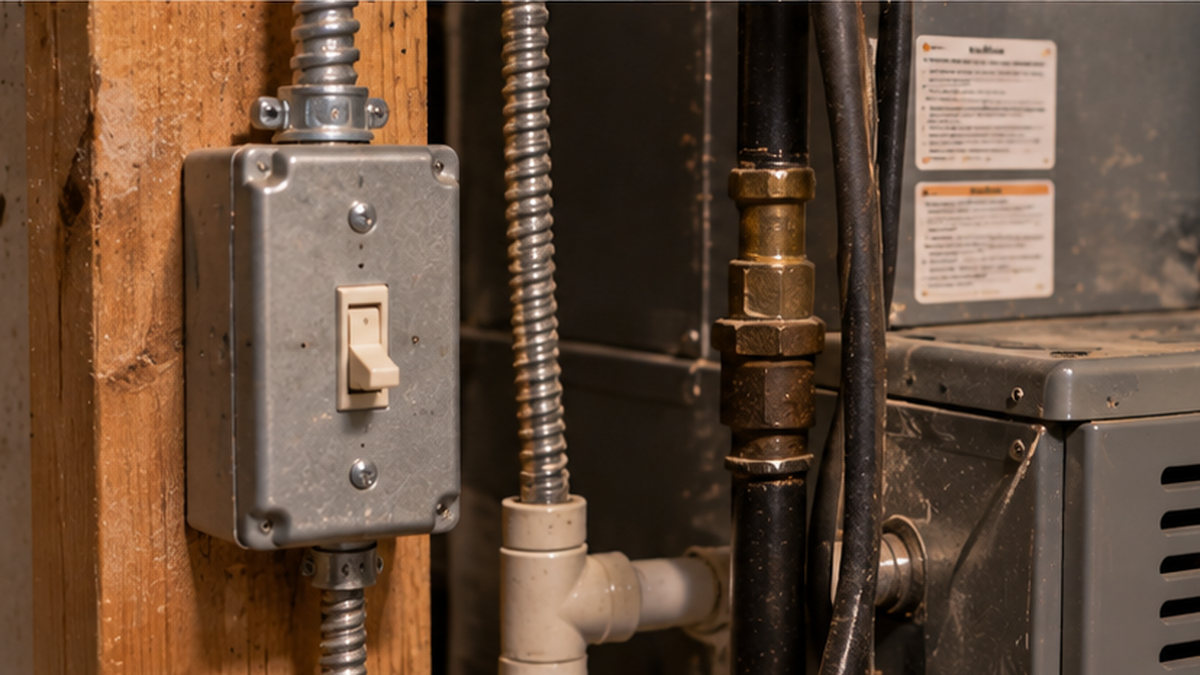
For almost every problem above, the first step is the furnace’s service switch. It usually looks just like a light switch and sits on or next to the furnace, on a nearby wall, or at the top of the basement stairs. Flipping off the furnace breaker in your electrical panel works too.
Leave the gas valve alone unless the gas company or fire department tells you to close it. And after a bang, a burning smell, or a tripped breaker, don’t try to relight or keep resetting the furnace.
Furnace Problems That Can Usually Wait
If the house is holding temperature and nothing smells, sounds, or looks wrong, these issues can usually go on the regular schedule:
- The furnace cycles on and off more than it used to but still keeps the house warm
- One room is always a few degrees colder than the rest
- A new rattle or hum, with no banging or grinding
- Your gas bill has crept up over the last few months
- A single lockout on a mild day that cleared after one reset
No heat on a mild day can usually wait too, as long as nobody at home is especially sensitive to cold. Just keep an eye on the forecast. If the furnace is still heating normally, it’s generally fine to keep using it until your appointment. If the house starts losing heat or a new smell or noise shows up, call back and we’ll treat it as urgent.
What to Tell the Technician When You Call
Tell us what the furnace is doing and when it started, along with any smells, sounds, or water you’ve noticed. If the status light on the furnace is flashing a code, count the flashes and read them off to us. It also helps to know roughly how warm the house is and whether anyone home is particularly sensitive to cold. That tells us how fast we need to get there and which parts to bring.
Emergency Furnace Repair Cost and Response Time
Our diagnostic is $99 on evenings, weekends, and holidays, and $75 during regular hours. Once we know what’s wrong, you’ll get a flat-rate price for the repair, and no work starts until you approve it. We can’t promise an exact arrival time, since weather and call volume change by the hour, but for emergency calls we typically arrive within one to three hours.
Emergency Furnace Repair in Streamwood and the Northwest Suburbs
Pure Comfort Heating and Cooling is a family-owned company that has served Streamwood and the northwest suburbs since 2008. If your furnace is showing any of these warning signs, call (708) 515-4822 day or night, and we’ll tell you honestly how soon we can be there.