



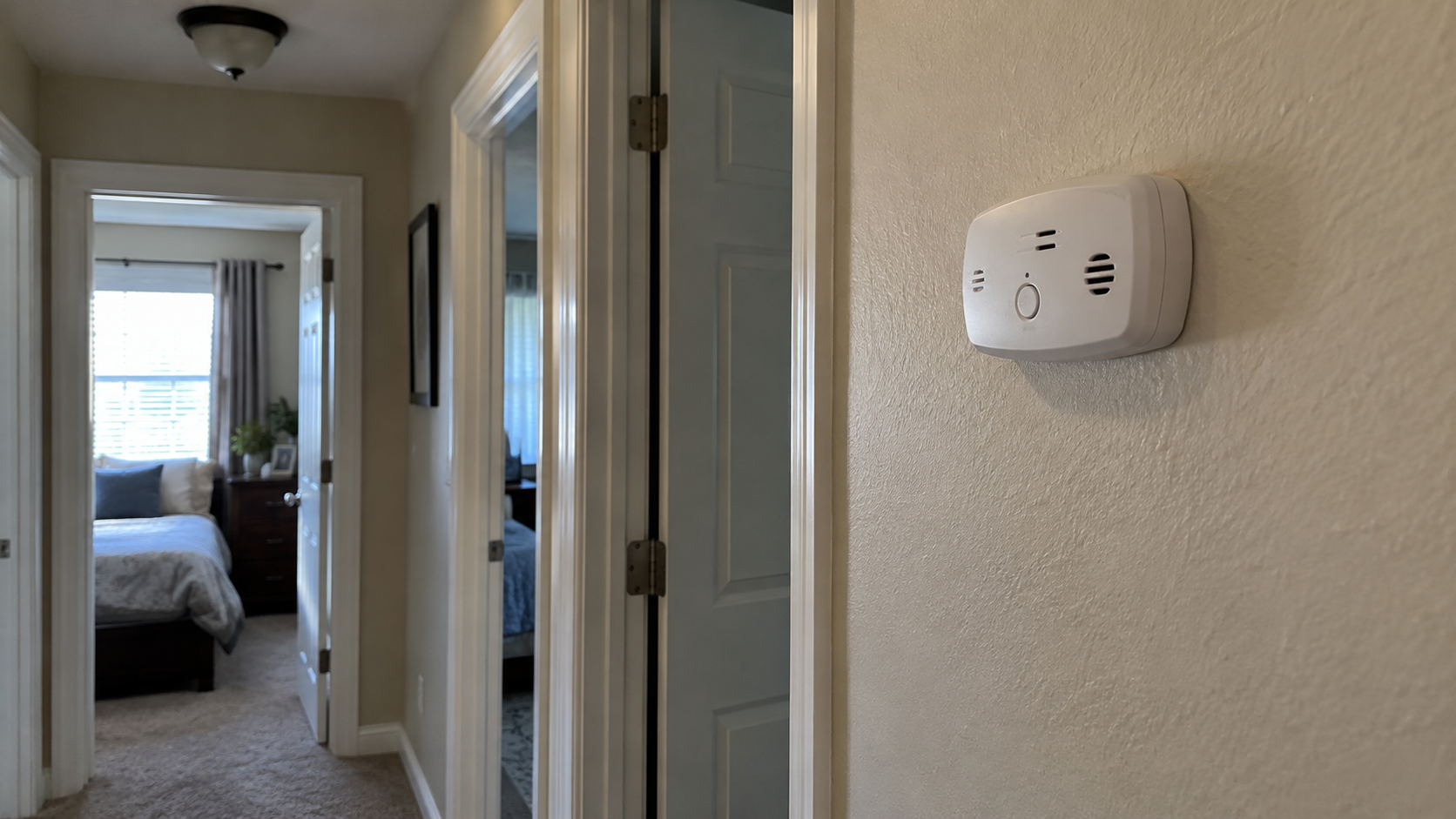
The signs of carbon monoxide from a furnace are almost all indirect. CO has no smell and no color, and a lot of people have no idea anything is wrong until an alarm goes off. So what you’re really watching for is what’s around it: soot where there shouldn’t be any, a burner flame that’s turned lazy and yellow, a vent pipe that’s slipped apart, and people in the house who get headaches at home that ease up once they’re out the door.
If your CO alarm is going off right now, or someone is dizzy or sick to their stomach, skip the rest of this. Get everybody outside and call 911. Once the fire department says the house is clear, we can send someone out through our emergency HVAC service to track down the source. For the slower stuff, like a bit of soot or a flame that doesn’t look right when nobody feels ill, book a regular furnace repair visit. If you have another way to keep the house warm until then, leave the furnace off.
How a Gas Furnace Ends Up Making CO
Burning natural gas always makes a little carbon monoxide. That part is normal. A furnace that’s set up right burns the gas cleanly enough that very little forms, and the exhaust goes up the flue and outside where it belongs.
Trouble comes from one of two directions. Sometimes the flame stops burning clean because the burners are dirty, the gas pressure is off, or the furnace can’t pull in enough air, and it starts making more CO than it should. Other times the exhaust stops leaving the way it’s supposed to. A blocked flue, a vent joint that’s come apart, or a crack in the heat exchanger (the metal wall between the fire and the air your blower moves through the house) can all let it in.
What to Look For at the Furnace
Grab a flashlight. You won’t need to take any panels off for this, and you shouldn’t remove the ones around the burners.
Soot or scorch marks
Check the front of the furnace around the burner opening, the top of the cabinet, and the spot where the vent pipe connects. Black soot or paint that’s gone brown and blistered in those areas usually means hot exhaust or flame is getting out somewhere it shouldn’t, or the burners are burning dirty.
A flame that’s the wrong color
A lot of furnaces have a small window where you can watch the burners while they run. You want a blue flame with a fairly crisp shape. If it’s mostly yellow or orange, lifts off the burner, or leans and flickers every time the blower kicks on, that points to a combustion problem and possibly a heat exchanger problem. A stray orange flicker now and then is just dust burning off. A big, floppy yellow flame isn’t.
The vent pipe
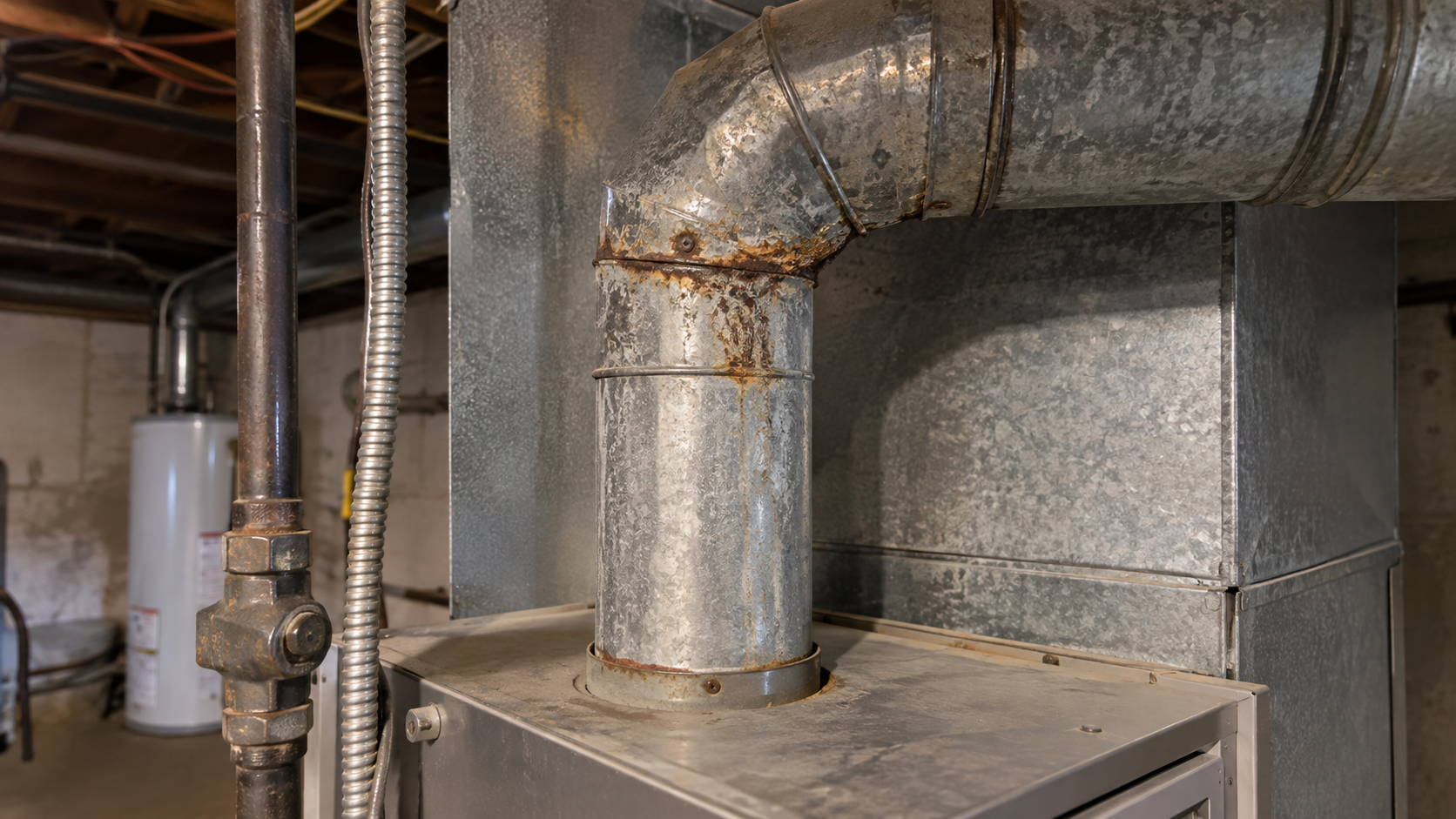
On an older, standard-efficiency furnace, you’ll see a metal pipe running from the top of the unit into the chimney. High-efficiency furnaces use white PVC instead, usually out through a side wall. Follow whichever one you have as far as you can, looking for joints that have pulled apart, rust holes, or pipe that sags back toward the furnace. Then step outside and make sure the PVC openings aren’t packed with snow or leaves. After a heavy snowfall, that’s an easy one to miss.
Warm air coming out of the draft hood
Older furnaces and many gas water heaters have a draft hood, which is an open collar near where the vent pipe attaches. Exhaust is supposed to get pulled up into the pipe. While the appliance is running, hold the back of your hand near that opening. If warm, damp air is pushing out at you, or there’s soot around the edges, exhaust is spilling into the room. A technician can confirm it with a draft test.
Rust or water on the chimney
Rust streaks down a metal vent connector, water dripping from it, or wet, stained brick at the base of the chimney usually means exhaust is cooling off and condensing before it makes it outside. A common cause in older homes is a furnace upgrade. The old furnace gets swapped for a high-efficiency model that vents out the side wall, and the water heater is left venting alone into a chimney that was built for two appliances. The draft gets weak, and the chimney may need a liner.
What CO Exposure Feels Like
Low-level carbon monoxide feels a lot like a flu coming on: headache, dizziness, weakness, nausea, and getting winded easily. As levels climb, it brings confusion, vomiting, chest pain, and passing out, and it can kill. Someone who’s asleep may never notice the early symptoms.
What usually separates CO from a real bug is the pattern. Several people feel lousy at once, the dog seems off too, nobody has a fever, and everyone perks up after a few hours away from the house. Waking up with a headache after the furnace has run all night is another clue.
If that sounds like your house, don’t stay inside trying to work it out. Get everyone into fresh air and call 911, and have anyone with symptoms checked even if they feel better outside.
What We Check on a CO Call
When we look at a furnace for a possible carbon monoxide problem, we treat the flame and the venting as one system. We inspect the burners and the flame, test combustion, look over the heat exchanger for cracks, and check the draft. Then we go through the flue and every vent connection, the chimney or PVC run, and the combustion air supply.
The space around the furnace matters too. A strong range hood, a clothes dryer, or a very tight basement can drop the air pressure enough to pull exhaust back down a furnace or water heater vent. That’s called backdrafting, and you can’t spot it by looking at the furnace alone.
Most causes are fixable. Dirty burners get cleaned, loose vents get resealed, and you’ll see a flat-rate price before any work starts. A cracked heat exchanger is the exception. That furnace needs to stay off, and we’ll walk you through the repair and replacement options so you can decide.
Keeping It From Happening Again
A yearly furnace tune-up catches most of this early. Ours covers the heat exchanger and burners, gas pressure and combustion, and the venting and flue connections. Between visits, keep laundry and boxes away from the furnace, clear the outdoor vent pipes after a storm, and test your alarms every month.
People also ask whether the furnace can be the problem when it’s switched off. It can’t, since it only makes CO while it’s burning. But a water heater on the same chimney, or a car warming up in an attached garage, can set off an alarm with the furnace off, so treat every alarm the same way. And opening the windows and staying put isn’t a fix. It might bring the reading down for a while, but whatever’s producing the CO is still running.
Get Your Furnace Checked
Pure Comfort Heating and Cooling is a family-owned company that’s served Streamwood and the northwest suburbs since 2008. If you’ve noticed any of these signs, call us at (708) 515-4822. We answer the phone 24/7.