



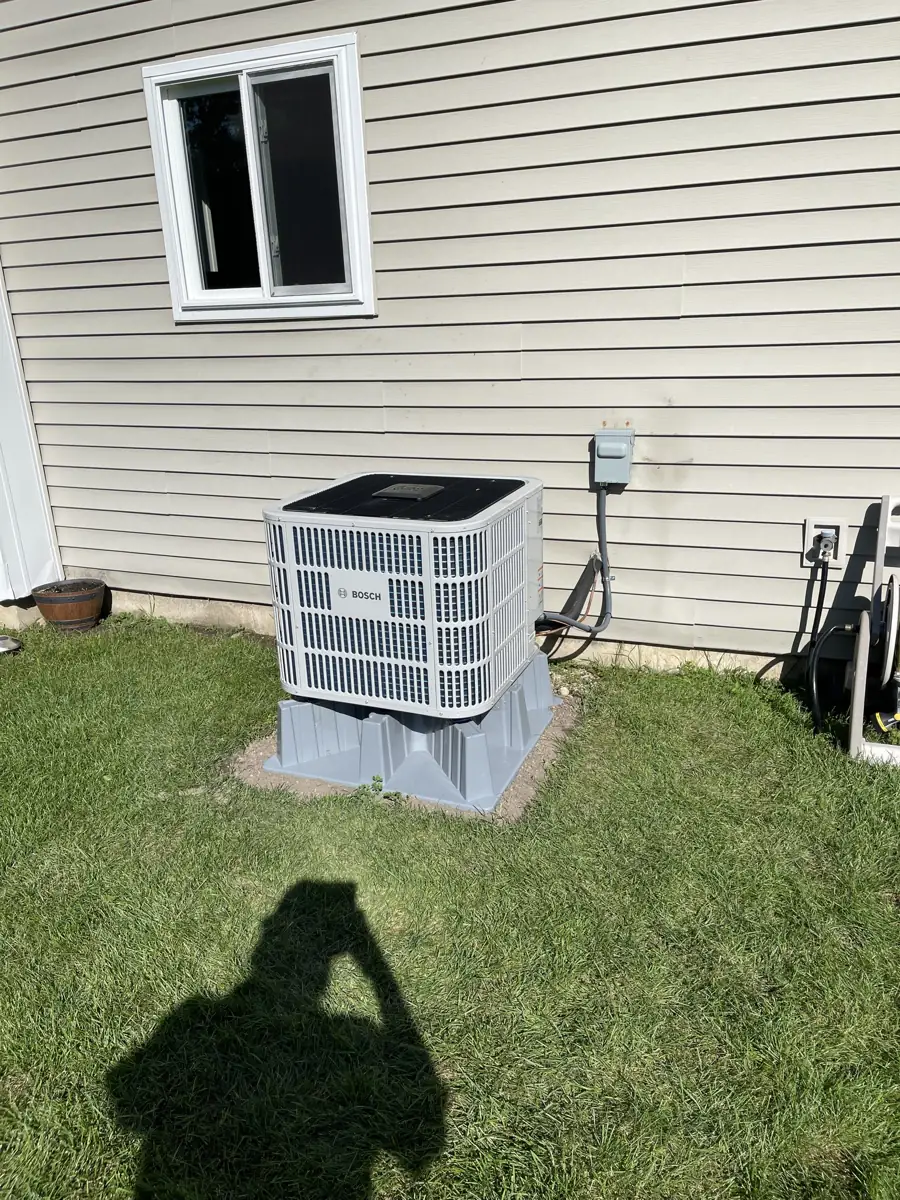
Yes. Today’s cold-climate heat pumps keep heating well below zero; the Bosch ductless heat pumps we install are rated to heat down to -22°F. In the Chicago suburbs, many homeowners pair a heat pump with a gas furnace in a dual-fuel system, so the heat pump handles most of the season and the furnace takes over on the coldest days. As of October 2026, a heat pump from Pure Comfort costs $6,000 to $15,000 installed, and a single-zone ductless system starts at around $4,500.
How a heat pump heats in cold weather
A heat pump is an air conditioner that can run in reverse. In winter it pulls heat from the outdoor air and moves it inside. There is usable heat in outdoor air even below zero, and cold-climate models use variable-speed compressors to keep pulling it out. As temperatures fall, output and efficiency drop, which is why sizing and a backup heat source matter here.
Dual fuel: heat pump plus gas furnace
A dual-fuel system uses a heat pump in place of a central air conditioner and keeps a gas furnace for backup. The thermostat switches to the furnace below a set outdoor temperature. You get efficient electric heat in fall, spring and milder winter days, gas heat in a deep freeze, and the same air conditioning in summer.
Dual fuel is often the easiest way to add a heat pump to a home that already has a good furnace and ductwork, especially when the air conditioner is due for replacement.
Ductless heat pumps for rooms the ducts do not reach
Ductless mini-splits are heat pumps too. They work well for additions, sunrooms, finished basements, garages and older homes without ductwork. A single-zone system starts at around $4,500 installed, with the price rising with line-set length and the number of zones.
What to expect in a Chicago winter
- Defrost cycles: the outdoor unit melts frost off its coil every so often. You may see steam from the unit. That is normal.
- Snow clearance: the outdoor unit should sit on a stand or pad above typical snow depth, with clear space around it.
- Warmer, longer airflow: heat pumps deliver air that is warm rather than hot, and they run longer at lower speed. Most people find the house more even.
- Backup heat: a gas furnace in a dual-fuel system, or electric heat strips in an all-electric system, covers the coldest stretches.
Rebates and costs
ComEd offers instant discounts on qualifying heat pumps in its service area, applied through our heat pump-trained technicians. Towns with their own electric utility, such as Naperville, St. Charles and Batavia, have their own programs. Financing is available, including 0% APR on select Lennox systems during Lennox promotions. Every estimate is free and in writing.
See heat pump installation, ductless mini-split installation or heat pump repair for more detail.
Frequently asked questions
Will a heat pump keep my house warm at -10°F?
A properly sized cold-climate heat pump keeps heating at that temperature, but with less output. In most Chicago-area homes we pair it with a furnace or backup heat for the coldest days.
Can I replace my central air conditioner with a heat pump?
Usually, yes. A heat pump installs where the air conditioner sits and uses the same ductwork. Your furnace stays as backup in a dual-fuel setup.
Are heat pumps louder than air conditioners?
Modern variable-speed heat pumps are generally as quiet or quieter, because they spend most of their time running at low speed.
Want to know if a heat pump fits your home? Request a free estimate or call (708) 515-4822.