
Family-owned business icon
Family Owned & Operated Since 2008

|

licensed and insured icon
Licensed • Insured • Bonded
Financing icon
Financing Available

|

24/7 emergency services icon
24/7 Emergency Service

Packaged HVAC Systems for Chicago-Area Homes

Pure Comfort installs packaged heating and cooling systems, with both in one outdoor cabinet, for homes where indoor space or layout makes a split system impractical. Every system is sized with a load calculation.

Pure Comfort Heating and Cooling is a Lennox Premier Dealer serving Streamwood and the Northwest Suburbs.

Five-star rating icon
5.0 Star Rating
456 Google Reviews
licensed & insured icon
Licensed & Insured
Your Peace of Mind
Financing available icon
Financing Available
Flexible Options
24/7 emergency service icon
24/7 Emergency Services
We're Here Anytime
Satisfaction guarantee icon
100% Satisfaction
Guaranteed

Need a New System?

Free in-home replacement estimates from a Lennox Premier Dealer.

  • Good, Better and Best options with upfront pricing
  • Nicor Gas and ComEd rebates applied where you qualify
  • Financing available, including 0% APR on select Lennox systems during Lennox promotions
  • Furnaces, air conditioners, heat pumps and mini-splits, installed and permitted

Need HVAC Repair?

Fast, honest HVAC repair from a family-owned Streamwood team, with upfront pricing before any work starts.

  • $75 diagnostic ($99 evenings, weekends & holidays)
  • 24/7 emergency service, with same-day appointments available
  • Upfront, flat-rate pricing before any work starts

Quick Summary

Pure Comfort installs packaged heating and cooling systems, with both in one outdoor cabinet, for homes where indoor space or layout makes a split system impractical. Every system is sized with a load calculation. We are a Lennox Premier Dealer serving Streamwood and the Northwest Suburbs.

Reviewed by , owner and NATE- and EPA 608-certified HVAC technician since 2008 · Updated
The Basics

What Is a Packaged HVAC System?

A packaged system houses the primary heating and cooling components together instead of separating indoor and outdoor equipment. Depending on the configuration, the cabinet may provide cooling with electric heat, a heat pump or a combination of air conditioning and gas heating.

These systems are commonly installed outdoors at ground level or on a roof and connect to the home’s ductwork. They can be a practical replacement when the property was designed around packaged equipment or has limited indoor mechanical space.

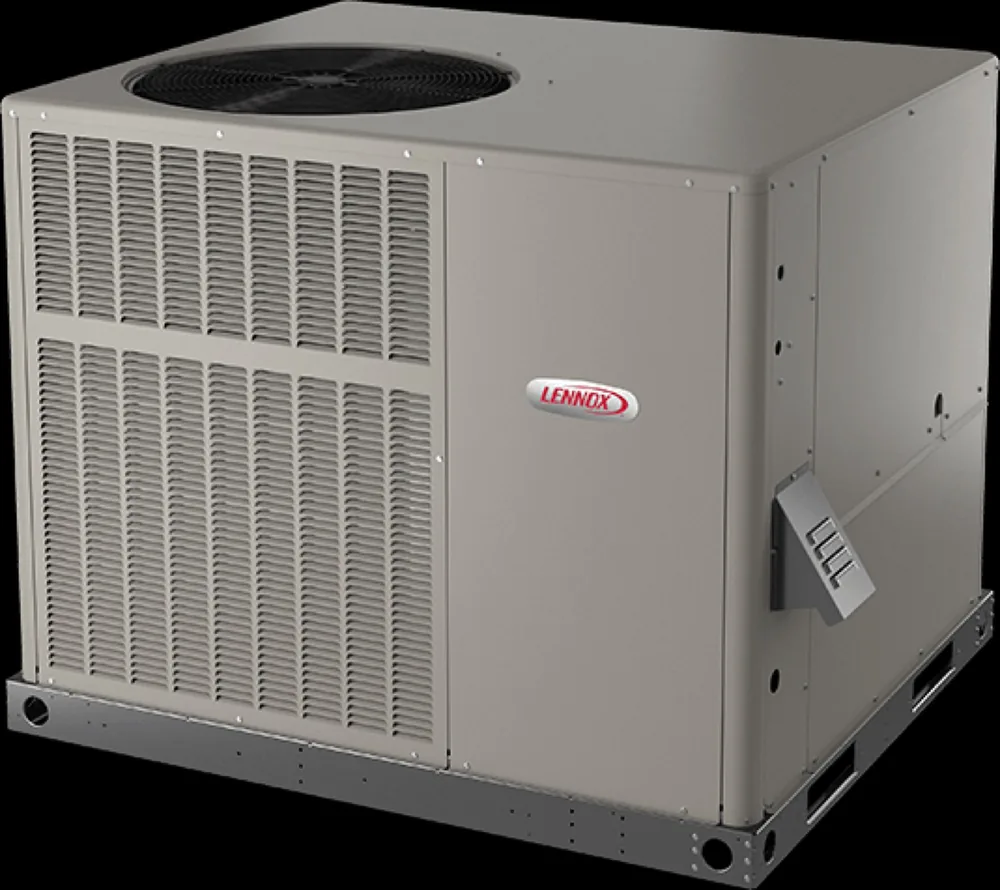
Lennox packaged heating and cooling system
The Options

Common Packaged System Configurations

  • Packaged Air Conditioning with Electric Heat
    This setup combines central cooling with electric heating components in one cabinet.
  • Packaged Heat Pump
    A heat pump configuration provides both heating and cooling through the refrigeration cycle, with supplemental heat available when required by the application.
  • Gas-Electric Packaged System
    This option pairs electric air conditioning with gas heating in the same outdoor unit.

The appropriate configuration depends on the home’s existing utilities, climate needs, duct design and current installation.

Is It For You?

When a Packaged System May Make Sense

Packaged equipment is usually most relevant for homes that already use this design, properties with limited indoor equipment space or buildings where rooftop or exterior placement is practical.

Changing from a split system to packaged equipment is a larger design decision. The available location, duct routing, structural support, drainage, utilities and service access must all work together.

Six Things That Matter

Features to Compare

01
Heating and cooling configuration
02
Capacity and load requirements
03
Applicable efficiency ratings
04
Single-stage, multi-stage or variable operation
05
Sound levels and cabinet location
06
Footprint, service access and weather exposure
Getting It Right

The Cabinet Is Only Half the Decision

Choosing the Right Configuration

The existing unit is a useful reference, but it should not be copied automatically. Home improvements, previous sizing errors, duct changes and comfort complaints can all affect the new recommendation.

Pure Comfort evaluates the home’s load, duct capacity, utility setup and installation conditions before comparing equipment. The goal is to select a system the home can support, not simply the largest or highest-rated option available.

Packaged System Installation Details

Installation may involve the equipment base or roof curb, supply and return transitions, condensate drainage, electrical service, gas piping and venting where applicable. The cabinet must remain level, weather-secure and accessible for future maintenance.

After installation, airflow, controls, heating and cooling operation, drainage and safety functions should be tested. Proper commissioning is especially important because every major function is concentrated in one cabinet.

Why Homeowners Choose Us

Why Choose Pure Comfort

1

Reviews load, ductwork and airflow before recommending capacity

2

Checks electrical, drainage, gas and venting requirements

3

Uses in-house HVAC installation crews

4

Tests operating modes and records commissioning measurements

5

Provides options-first guidance without high-pressure selling

Keep Reading

Related Services

Packaged Units in the Chicago Suburbs: What to Know

Most homes in the Northwest and West Suburbs have split systems, with a furnace in the basement and an AC outside. Packaged units show up mainly in slab-on-grade ranches and townhomes without a basement, homes with crawlspace ductwork, some 1970s and 1980s developments, and on the roofs of small commercial buildings. When we replace one, the first question is whether to stay packaged or convert to a split system.

OptionWhen it makes senseThings to plan for
Replace with a new packaged gas-electric unitDuctwork already connects to an outdoor cabinet and there is no indoor room for a furnaceCurb or pad condition, gas line, electrical disconnect, crane on roof installs
Replace with a packaged heat pumpAll-electric homes or homes that want to qualify for ComEd heat pump discountsBackup electric heat sizing and panel capacity for Chicago winters
Convert to a split systemA utility room, attic or crawlspace can hold a furnace or air handlerNew refrigerant line set, venting and condensate drain; often more efficient choices

What affects the price

  • Tonnage and heating capacity, set by a Manual J load calculation
  • Gas-electric versus heat pump configuration and efficiency
  • Ground pad versus roof curb; roof installs may need a crane and a new curb adapter
  • Duct transitions where the new cabinet's openings do not line up
  • Electrical service and gas piping changes
Packaged replacements are quoted after a free site visit because pad, roof and duct conditions vary so much. For comparison, a split furnace and AC replacement runs $8,000 to $19,000, and a heat pump with an air handler runs $8,500 to $15,000+ before the ComEd instant discount of up to $2,000.

Service and maintenance prices

ServicePrice
Diagnostic$75 ($99 evenings, weekends and holidays)
Residential packaged unit tune-up$99 per season
Commercial rooftop unit tune-up$149
Rooftop unit belt replacement$340
Capacitor / contactor$275 to $348 / $330 to $398
Condenser fan motor$735

More Questions We Get

How long do packaged units last in Illinois?

Typically 12 to 18 years. Because the whole system sits outdoors, the cabinet, heat exchanger and electrical parts take more weather than a split system.

Can a packaged unit be a heat pump?

Yes. Packaged heat pumps qualify for the same ComEd incentive tiers as split heat pumps when they meet the efficiency requirements.

Do you service commercial rooftop units?

Yes. See our commercial HVAC page. Commercial tune-ups are $149.

Common Questions

Frequently Asked Questions

A packaged system places the main heating and cooling components in one outdoor cabinet. A split system separates the outdoor equipment from an indoor furnace or air handler.

Yes, depending on the configuration. Packaged systems may combine air conditioning with electric heat, use a heat pump or pair cooling with gas heating.

Not automatically. The home’s current load, ductwork, airflow and previous comfort issues should be evaluated before capacity is selected.

Often, but the duct size, transitions, leakage and airflow capacity should be checked. Modifications may be needed when the existing duct system cannot support the replacement equipment.

Licensed, certified and accredited

Reviewed and last updated by Gene Baldassano, owner of Pure Comfort Heating and Cooling and a NATE- and EPA 608-certified HVAC technician since 2008.